



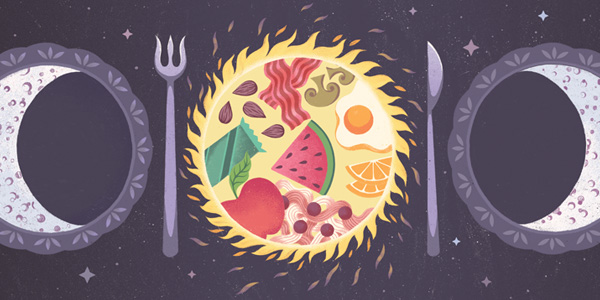
The when of eating: The science behind intermittent fasting
By Andreas von Bubnoff What and how much we eat isn’t the only important thing when it comes to healthy nutrition. Timing seems to matter, too. Read more.
Unseen scars of childhood trauma
By Amanda B. Keener Twenty years of research have established the connection between adverse childhood experiences and long-term health. Now researchers are looking for ways to measure the biology behind the correlation and try to reverse it. Read more.
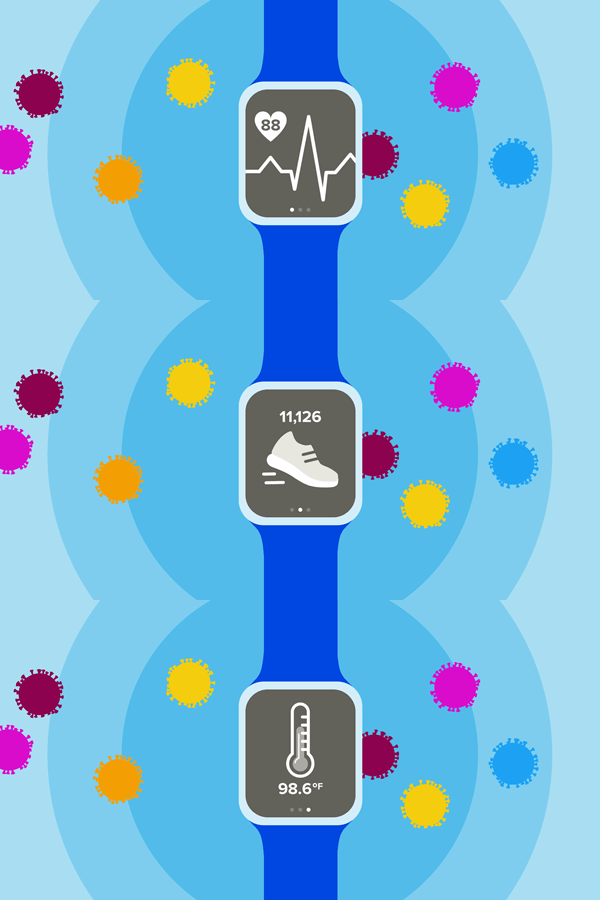
The dash to adapt smartwatches to help detect Covid infections
By Matthew Hutson Wearable devices already collect vital signs like heart rate and skin temperature. New algorithms can use them to catch illness early — leading to urgent efforts to help battle the pandemic. Read more.
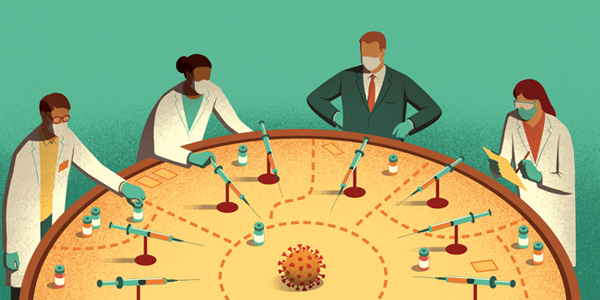
Are too many scientists studying Covid?
By Julie K. Pfeiffer and Terence S. Dermody The pandemic prompted many scientists to pivot their research to the coronavirus. That’s not an entirely good thing. Read more.
From the archives
Vaccine makers are grappling with how to adapt Covid-19 vaccines to new variants of the virus, Kai Kupferschmidt reports in Science Magazine. Brush up on the ins and outs of viral evolution.
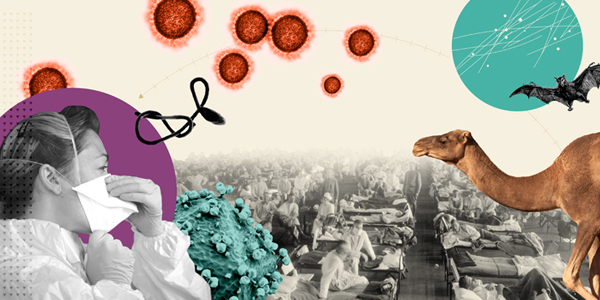
How viruses evolve: Lessons for the pandemic
By Bob Holmes Pathogens that switch to a new host species have some adapting to do. How does that affect the course of a pandemic like Covid-19? Read more.
What we’re reading
Tracking the virus
Of camels and coronaviruses The virus that causes Covid-19 jumped to humans from an animal host. And there are other animals, carrying other viruses, to worry about. In BBC Future, Jacob Kushner details how scientists in Kenya — suited up in protective gear and often travelling via motorcycle — are testing camel herds and herders to prevent MERS from jumping to people again. An even deadlier coronavirus, it has caused human outbreaks since 2012 — and seems poised to strike again.
Scientists weigh in With an emphasis on science-backed policies, the Biden administration has announced a coordinated strategy to combat the spread of Covid-19. In Nature, Amy Maxmen and Nidhi Subbaraman let scientists do the talking in a story on first impressions of the president’s plan. While some public health officials are grateful for the signaled commitment to evidence-based solutions, others say, “Show me the money.” Concerns also include getting at-home tests to needy communities, more collaborative surveillance for new coronavirus strains and whether the US can prioritize vaccinating poorer nations anytime soon.
Distract yourself with science
Preserving corpses The plant known as corpse flower (Amorphophallus titanium) blooms rarely, but when it does, it’s a spectacle: The flower can be taller than a grown man, is supported by underground parts that can weigh more than 100 pounds, and emits a formidable, putrid stench. Sadly, fewer than 1,000 of the fascinating plants remain in the wild, writes Doug Johnson for Undark. With rare and unpredictable blooming and sensitive seeds that can’t be frozen or otherwise easily preserved, the plant presents multiple challenges for researchers trying to save it.
The hole shebang Quick: How many holes does a straw have? The answer depends on what you mean by “hole.” And that, surprisingly, is a slippery concept, writes David S. Richeson at Quanta Magazine. For roughly 270 years, mathematicians have been refining their definition of holes — and, more generally, pliable shapes — through the development of topology, the study of spatial relationships. And their efforts go well beyond straws, Richeson writes. Concepts from topology can help to identify gaps in everything from sensor networks to political support.
Art & science
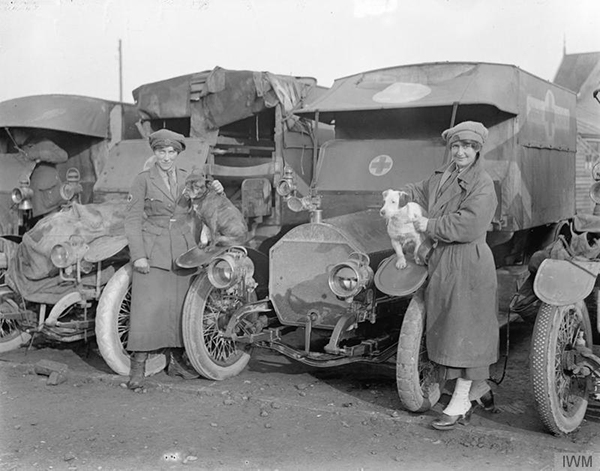
CREDIT: JOHN WARWICK BROOKE / IMPERIAL WAR MUSEUMS / PUBLIC DOMAIN
Dogs of war In case you need a good reason to look kindly upon dogs: The animals may become important players in the pandemic response. Preliminary studies suggest that our four-legged friends can sniff out Covid-19 infections and could be usefully stationed as screeners in spots like airports and sports arenas. This is not the first time that canines have been called upon to assist during a national crisis. In the above 1917 photo from the Western Front, two members of Britain’s First Aid Nursing Yeomanry are featured with their dogs, which helped find fallen soldiers.
The picture is one among several featuring rescue dogs in a photo essay by Russell Moul at the Wellcome Collection. (It notably includes Sir Edwin Landseer’s painting Alpine Mastiffs Reanimating a Distressed Traveller, which is credited with birthing the myth of St. Bernard dogs carrying little brandy casks around their necks while on missions.) For a photo round-up of dogs in Covid-detection training, see Alan Taylor’s recent piece in the Atlantic.