



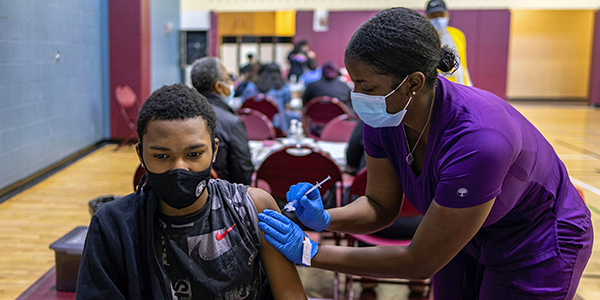
Covid-19: Why race matters for health
By Hunni Media for Knowable Magazine VIDEO: The pandemic has highlighted the complex links between inequality, racism and disease risk in America. Harvard public health scholar David Williams explains. Watch now.
From the archives
The May 22 eruption of Mount Nyiragongo displaced tens of thousands of people living in Goma, in the eastern Democratic Republic of Congo. The city sits on the edge of Lake Kivu, where huge quantities of dissolved carbon dioxide and methane lurk below the surface, prompting concerns that lava-ignited explosions may follow the eruption, Diana Zeyneb Alhindawi reports for Insider. For more on Lake Kivu’s unusual properties, read our story.
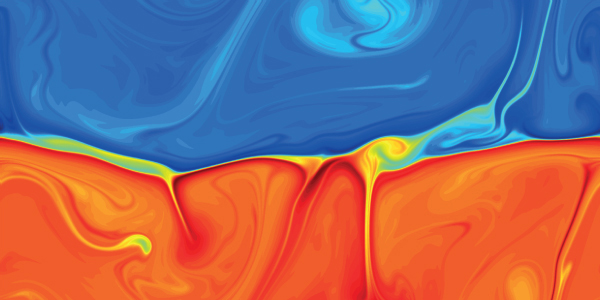
The danger lurking in an African lake
By John Wenz Kivu is no ordinary lake, with dense depths packed with methane and carbon dioxide gas. Its features hold aquatic puzzles, explosive hazards and the capacity to provide valuable energy. Read more.

Remote work can be a lot better than this
“Even if we think we are rational, logical creatures, we make decisions in social groups by absorbing a wide range of signals,” writes journalist and anthropologist Gillian Tett. In an excerpt from her new book in the Guardian, Tett explores what’s lost when work goes remote. Read more on making telework work better in our opinion piece by work-life scholar Ariane Ollier-Malaterre and for historical context on remote work, see our story.
What we're reading
Pandemic origins The notion that SARS-CoV-2 — the virus that causes Covid-19 — could have leaked from a research lab in Wuhan, China, is getting a lot of play these days. What’s changed? Nothing, as far as the scientific evidence goes. But some scientists may now be more open about expressing uncertainties, Carl Zimmer, James Gorman and Benjamin Mueller write in the New York Times. “If the two most vocal poles of the argument are natural spillover vs. laboratory leak, these new voices have added a third point of view: a resounding undecided.”
“Doubt,” of course, means something different to regular people than it does to scientists, Adam Rogers reminds us in Wired: Acknowledging uncertainty doesn’t mean all scenarios have an equal chance of being true; it means something is unknown. But no matter where the truth lies, the tone of the debate over Covid’s origins is a problem: It may harm international efforts to reach consensus on urgent pandemic-related issues such as vaccine preparedness and reforms to how virus-surveillance data are reported, Amy Maxmen writes in Nature.
And answers may be a long time coming: It took 14 years to get definitive evidence that the 2002–2004 SARS epidemic was caused by a virus transmitted from bats to civets to humans. In the meantime, says Maxmen in a podcast with FiveThirtyEight’s Anna Rothschild and New York Public Radio’s Nsikan Akpan, there are other pressing questions that the origins debate risks sidelining. How good are we at detecting and responding to spillovers of disease from animals to people? How should nations alert each other to such events? Do we have stockpiles of protective gear? “I want to be clear, I’m not against studies,” Maxmen says. “I’m just sort of thinking big picture here — how much does screaming about this issue detract from other issues?”
Counting on it Scratch marks on very old animal bones suggest that ancient humans, including our Neanderthal cousins, may have been counting things. But no one knows how, why or when our ancestors decided that numbers might be a good idea, writes Colin Barras at Nature. As the quest for the origin of numbers heats up, neuroscientists, cognitive archaeologists and linguists are weighing in. Clues — from modern numeral systems, ancient hominid relics, nonhuman animals and more — are driving a swirl of hypotheses about where humans got their numeracy, and just how far back in time that interest goes.
Battery bind Electric vehicles are hot — the number of Teslas, Leafs and other zippy cars on the world’s roads may grow more than tenfold by 2030. But everything breaks down eventually. And while old-fashioned car batteries are largely recyclable, that’s trickier for batteries from electric cars. In Science, Ian Morse covers the chemistry and engineering that make recycling EV batteries so challenging (toxic chemicals are only part of the problem), the current state of play, and how nations and manufacturers could take charge.
Art & science
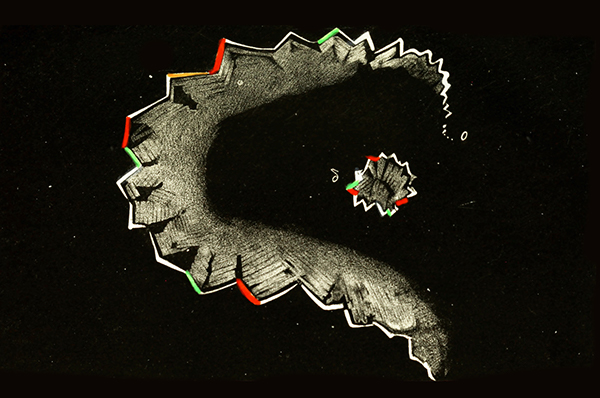
CREDIT: HUBERT AIRY, 1870
Capturing the aura Migraines are not just bad headaches. They’re a neurological condition that can come with nausea, sensitivity to sounds and smells and, perhaps most famously, visual disturbances or auras. Though migraines are still somewhat poorly understood in terms of their causes and potential treatments, physicians and scientists — particularly those who have been migraine sufferers themselves — have been working to describe them for centuries.
Englishman Hubert Airy was one such physician. A pioneer in the study of migraines, he tried to depict his own experiences of the accompanying visual distortions. Shown above is his 1870 representation of a “scintillating scotoma,” a form of aura comprising flickering blind spots that often appear in the form of sharp zigzags across the field of vision. Read more about these ocular disturbances and see more depictions at the Public Domain Review.