


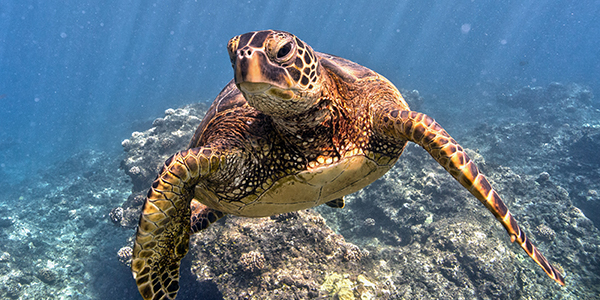
The case for ocean optimism
By Eric Bender With the health of the ocean under threat, a rallying cry for marine conservation goes global. Here are some of the good-news stories. Read more.
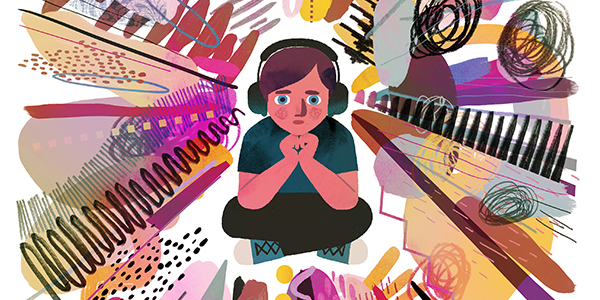
Studying poverty through a child’s eyes
By Alla Katsnelson Research on early-life adversity should pay more attention to the perspective of children themselves. Read more.
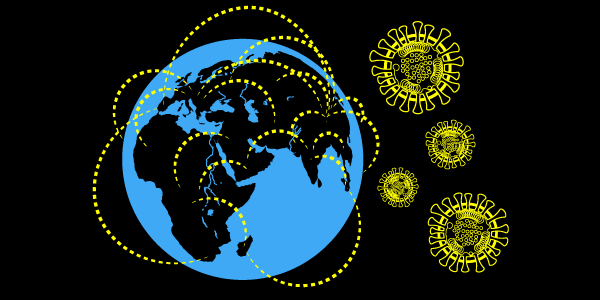
Building an immune system for the planet could prevent the next pandemic
By David Bray OPINION: We need a global information network that spans borders so we can spot — and stop — new pathogens before they threaten world health. Read more.
From the archives
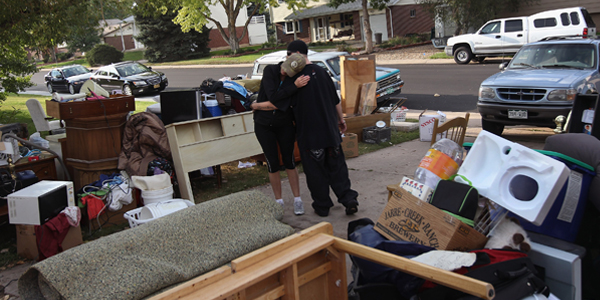
Eviction's long reach
After the national eviction moratorium expired at the end of July, the US Centers for Disease Control and Prevention, with support from President Biden, reinstated it more narrowly to protect public health in areas facing high rates of Covid-19. (Right now, those areas include about 90 percent of the US population.) That initiated another round of political fighting due to end up in court — again. But as Jerusalem Demsas writes in Vox, poor data about renters in need has hampered distribution of most of the money intended to help people avoid evictions.
Why is this a public health issue? Read up on the domino effects on health and self-sufficiency that eviction can trigger.
What we're reading
A matter of some gravity Gravity, writes KC Cole in Wired, is a superpower that penetrates everything — from the universe to her own vertebrae, literally turning her into a “little old lady.” “This superpower comes from the fact that, as Einstein revealed, gravity is space and time, warped by the presence of matter. Mass curves the spacetime around it into valleys and wells into which things appear to ‘fall’ — but in fact follow the straightest paths possible through a topologically complex landscape,” Cole writes. Her essay reminds readers of the role of such unseen forces in the universe and in our lives, taking us from efforts to escape its pull (hello, Jeff Bezos) to dark energy’s outward push, line dancing (or lack thereof) and the rabbit holes of memory.
Legging it The most familiar harvestmen species are known as daddy longlegs, and for good reason — their limbs can be nearly 30 times longer than their bodies. Those eight legs do more than just perambulate — they also help the animal hunt, breathe, smell and mate. In the Atlantic, Katherine J. Wu explores the fascinating biology of these underappreciated arachnids and their awesome appendages. New genetic investigations may even lead to discoveries about the evolution of harvestmen and their relatives — the spiders, mites, ticks and others.
Bridging the cosmological chasm Our knowledge of the cosmos has gotten increasingly precise, and yet we’ve hit a wall with big questions about dark matter, dark energy and the beginning of the universe. Bridging this “cosmological chasm” will require new modes of thinking, says astrophysicist Pedro G. Ferreira in a video for Aeon. Perhaps the answers lie deeper in the math, or lurk in existing data, or await innovative experiments. The instinct to build “bigger and better” instruments may take us only so far, he says. “There’s a worry that we will increase the precision of our ignorance without actually flipping over into knowing something new.”
Art & science
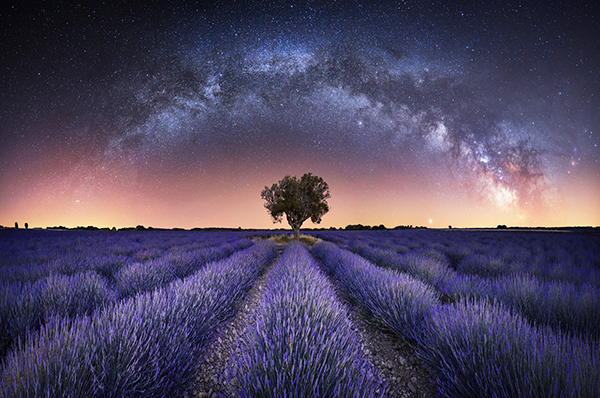
CREDIT: © STEFAN LIEBERMANN
Lavender Milky Way In Valensole, France, fields of lavender stretch to the horizon. Light from the Milky Way galaxy arcs overhead. In the distance, a glow of light from far-off towns marks the boundary between land and sky. This picture, captured in June last year by German photographer Stefan Liebermann, has made the shortlist for the Astronomy Photographer of the Year competition, an annual contest run by the Royal Observatory Greenwich and the BBC Sky at Night Magazine. See more top contenders, selected from roughly 4,500 submissions, of sights near and far — including a brilliant aurora over Iceland and the galaxy NGC 3981, a wispy star system about 65 million light-years from Earth.