



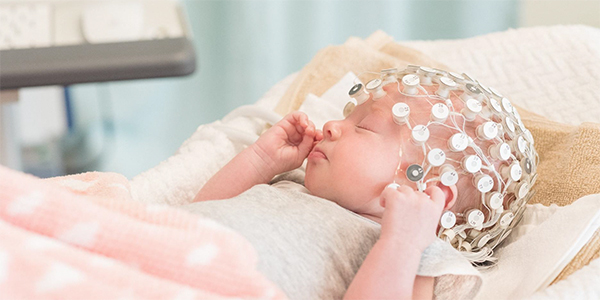
How learning happens in the brains of sleeping babes
By Carolyn Wilke Neuroscientists have long known that shut-eye helps consolidate memories in adults. Napping may play an equally crucial role in infants and young children. Read more
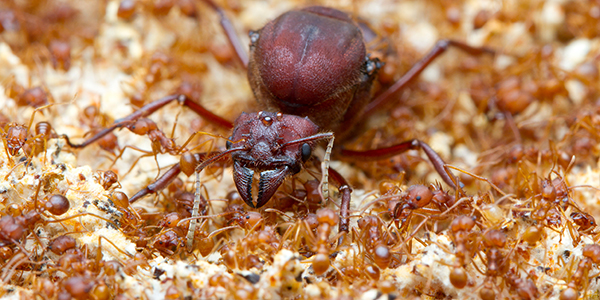
How can ant and termite queens live so long?
By Tim Vernimmen Social insects disobey evolutionary principles that say creatures invest in body maintenance or reproduction — not both. Scientists want to know how the creatures do it. Read more
This week’s event
Why sleep matters for personal and public health
Wednesday, January 19, 2022: 9 AM San Francisco PST | Noon New York EST
Sleep matters: Disrupted sleep ups the risks for heart disease, cancer and depression. How? And what can be done about the inequities that leave communities of color and poor people at greater risk?
From the archives
Two-thirds of Russian territory sits on permafrost, which is liberating mammoth corpses, ancient anthrax spores and of course, carbon and methane, as it thaws. Read Joshua Yaffa’s account in the New Yorker of crisscrossing Siberia in the age of climate change and learn more about warming’s effect on the Earth’s soils with our interview with microbial ecologist Janet K. Jansson.
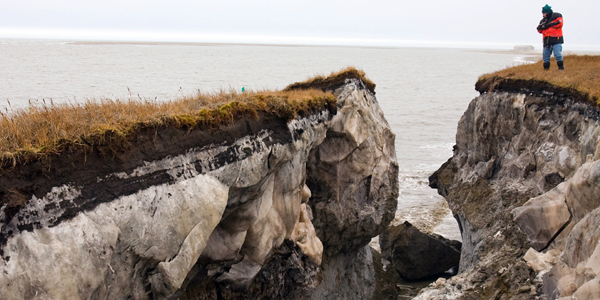
As climate changes, so does life in the planet’s soils
By Rodrigo Pérez Ortega To understand what might be lost, ecologist Janet K. Jansson taps molecular methods to explore Earth’s underground microbes, from the permafrost to the grasslands Read more
What we’re reading
Powers of ten redux
In 1977, Charles and Ray Eames (yes, designers of the iconic chair) unveiled the science short film “Powers of Ten,” which depicted the scale of the universe, macro and micro. Now, more than 40 years later, a video by BBC Ideas and the Open University revisits that classic. It incorporates new knowledge of the cosmos and takes us beyond the original 100 million light-years distance from Earth to an astonishing 100 billion light-years away. Watch this 7-minute mind-blowing tour of the universe — from its start at a humble beach picnic to the edge of everything — at Aeon.
Interspecies pals? It’s complicated
The award-winning documentary “My Octopus Teacher” challenged the notion of its starring invertebrates as reclusive, antisocial creatures. But the heartwarming connection depicted between the filmmaker and his “teacher” may distort the ambiguous reality of octopus nature, writes Ferris Jabr in Hakai Magazine. Jabr examines the enigmatic behaviors of these eight-armed mollusks and asks: Are we projecting our intrigue with interspecies companionship — or could we really be friends with an octopus?
A century of quantum
Quantum mechanics taught us “that reality isn’t what it seems,” writes Tom Siegfried at Science News. In an essay that looks back on quantum theory’s fitful birth in the early 1900s to today’s still-hoped-for developments that may yield superior code-cracking computers, Siegfried details the people and discoveries that changed our understanding of information, existence and the nature of reality.
Art & science
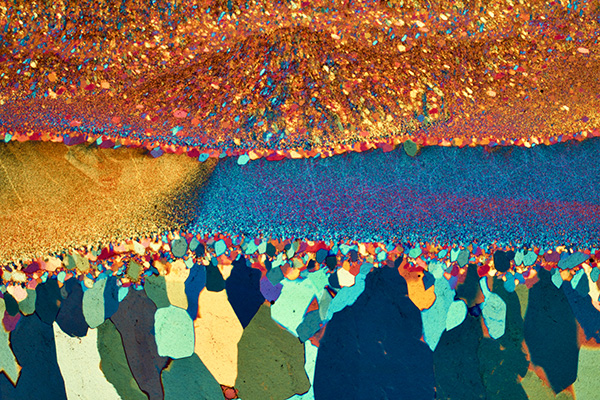
CREDIT: BERNARDO CESARE, DEPT. OF GEOSCIENCES, UNIVERSITY OF PADOVA, ITALY (2ND PLACE IN 2021 NANOARTOGRAPHY COMPETITION)
Rock concert What appears to be a large-scale abstract painting is actually an extremely zoomed in photo from real life. A bit of agate, plucked from Brazil, provided the swaths of speckles captured in this image. Agate is characterized by mottled or striped bands of color — the chunkier fragments seen at bottom are typical of crystals of the semiprecious mineral, while the middle and top display unusually fine-grained fragments. How fine-grained? Well, this photo was taken through a microscope and what we see is only 5.3 millimeters across — roughly the diameter of a pencil eraser.
Italian geologist Bernardo Cesare shared second place in the NanoArtography 2021 contest with this shot, which he dubbed “The Concert,” alluding to its likeness to a throng of people. His submission was one of 195 from 28 countries. From abstract creations to eerily accurate representations of everyday scenes, the images all use nanotechnology and minuscule photography to showcase scientific research around the world. If the 2021 winners leave you wanting more, the contest website showcases every winner’s work since the contest’s inception in 2016.