




How to deal with work stress — and actually recover from burnout
By Chris Woolston Mindfulness, detachment, selecting off-time activities with care: Here are evidence-based strategies to achieve healthy work-life balance. Read more
From the archives
Newly unveiled 3-D maps of the Milky Way that feature billions of stars and asteroids are triggering a mad dash for discoveries. The dump of nearly three years of observations from Europe’s orbiting Gaia telescope includes spectral data that can reveal the chemical composition of stars and asteroids, helping astronomers to understand how these bodies emerged and evolved, Sasha Warren reports in Scientific American. For more on the history of the Milky Way, read our interview with galactic archaeologist Amina Helmi.
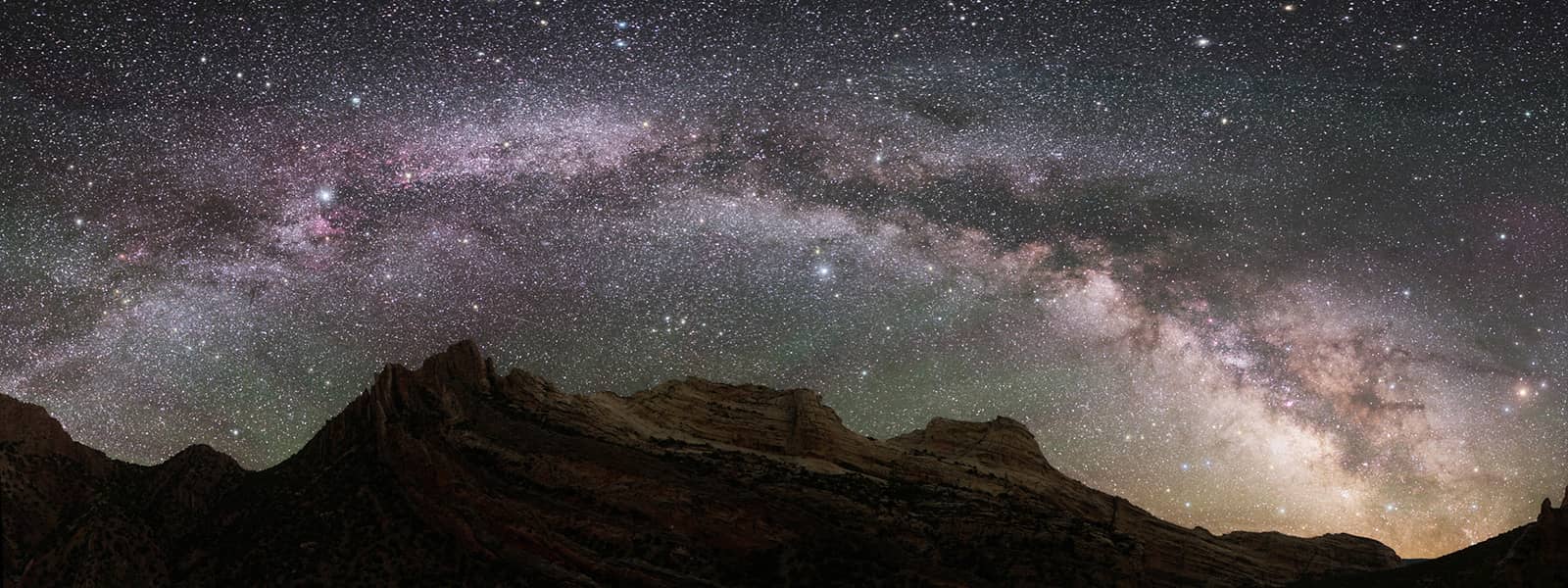
A galactic archaeologist digs into the Milky Way’s history
By Ramin Skibba Astrophysicists now have the data and models to uncover subtle imprints from our galaxy’s past. Read More
Many of us have heard of circadian rhythms and the body’s internal “clock,” but few realize the importance of secondary clocks governing the physiological cycles of organs, the immune system and even each and every cell. In the New York Times Magazine, Kim Tingley writes on progress toward exploiting this knowledge to better treat maladies from PTSD to diabetes. For a deep dive into harnessing circadian rhythms to fight cancer, read our story.
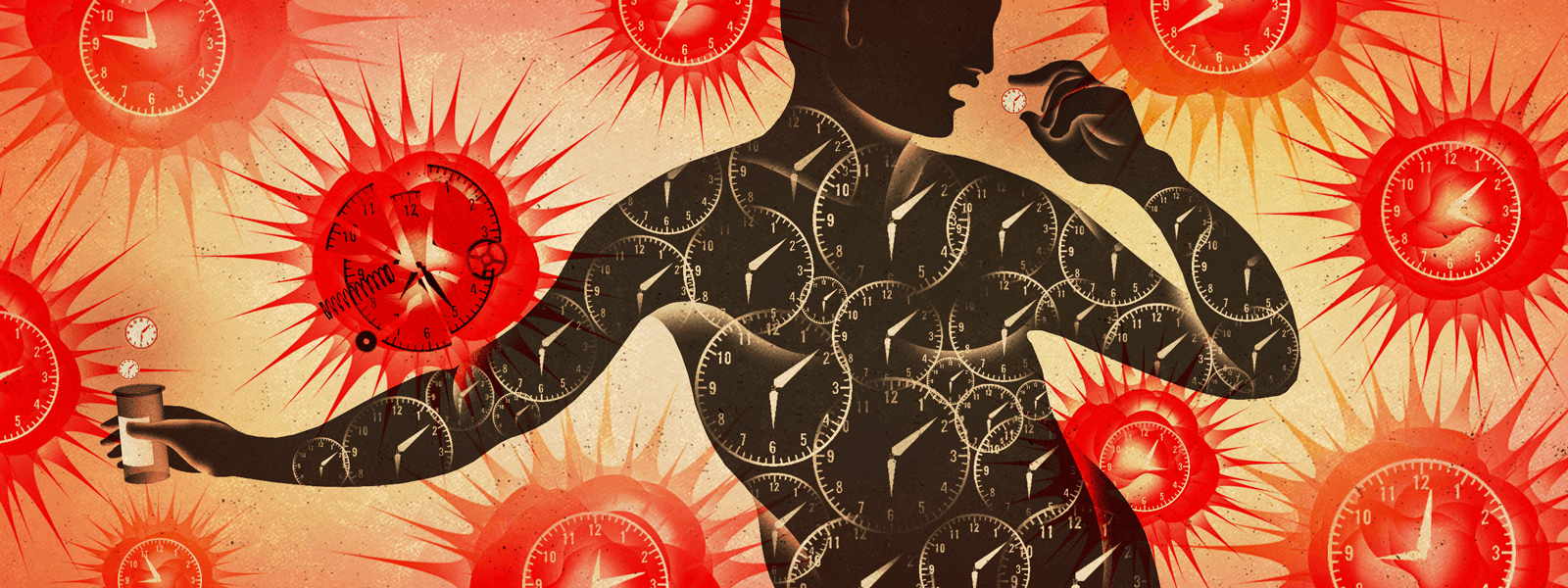
How to ruin cancer’s day
By Elie Dolgin By taking advantage of differing circadian rhythms in healthy cells and tumors, researchers hope to add a powerful new tool for treating the disease. Read More
What we’re reading
Not mucking around
For thousands of years, people around the world have been shaping buildings made of mud — a practice some architects are hoping to revive. Our climate crisis and a reliance on emissions-heavy concrete for buildings has made other construction materials attractive. Mud, which ventilates well, absorbs heat and creates sturdy, storm-resistant structures, could be one viable alternative. For BBC Future, Isabelle Gerretsen reports on what benefits the humble backyard material could offer and on the architects specializing in mud construction.
Hot take
Physicists still haven’t firmly answered a seemingly simple question: Does hot water sometimes freeze faster than cold water? (And, if so, why?) Casual observations of that counterintuitive outcome trace back to Descartes and even Aristotle, Adam Mann writes in Quanta Magazine. But scholarly studies began only in the late 1960s, instigated by a Tanzanian teenager named Erasto Mpemba. More recently, the Mpemba effect, as it’s now termed, has been observed in exotic substances such as crystalline polymers, and newer work involving lasers and tiny glass beads suggests, indeed, that hot liquids can beat cold to the freeze. But some scientists are still skeptical.
Ocean outlaws
Members of the marine conservation activist group Sea Shepherd were once famous, high-seas vigilantes, sabotaging whaling vessels and chasing down illegal fishing vessels. Today, though, they’re undergoing a dramatic change. For Science, David Grimm covers the group’s transformation from ocean outlaws to conservation scientists; it recently persuaded its first chief scientist to come aboard. Some researchers are only cautiously optimistic about the group’s about-face, but everyone agrees there’s much to be done to understand Earth’s changing oceans.

Art & science
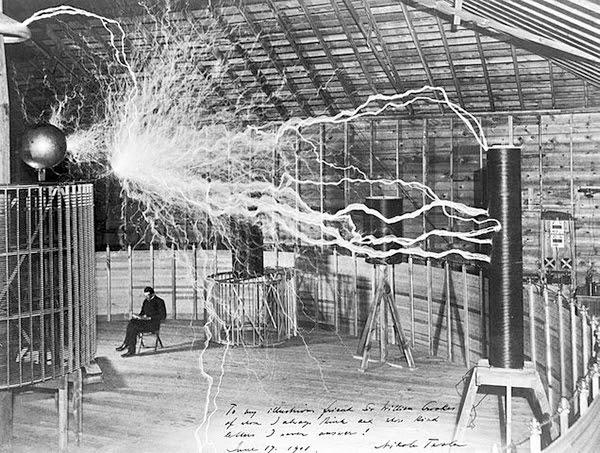
CREDIT: THE CENTURY MAGAZINE / PUBLIC DOMAIN
Good vibrations
Nikola Tesla loved a demonstration. His most famous show — subjecting himself to 250,000 volts in front of onlookers — proved that alternating current electricity was safe. But he knew when to play it safe, too. Though this photo looks like a potentially precarious situation, it’s actually a double-exposed photograph made to look as if the inventor was calmly sitting next to massive bolts of electricity.
Tesla, whose 166th birthday is today, posed in this photo to illustrate his own article, “The Problem of Increasing Human Energy,” in a 1900 issue of the Century Magazine. When the photo was taken in 1899, it had been only eight years since he invented the Tesla coil, which is still used in communication equipment today. But Tesla was already thinking of how far his communication technologies could go: He wanted to develop gear to communicate with life on other planets, an idea he laid out in his magazine article.
If he could make Earth vibrate at specific frequencies, he reasoned, what would stop our whole planet from becoming a communication device for reaching other life forms elsewhere in space? Endless power from the Earth’s movement also would let anyone live anywhere on its surface. “It is highly probable that if there are intelligent beings on Mars,” Tesla wrote, “they have long ago realized this very idea.” Read more at Public Domain Review and brush up on his contributions to science with this Department of Energy primer.