



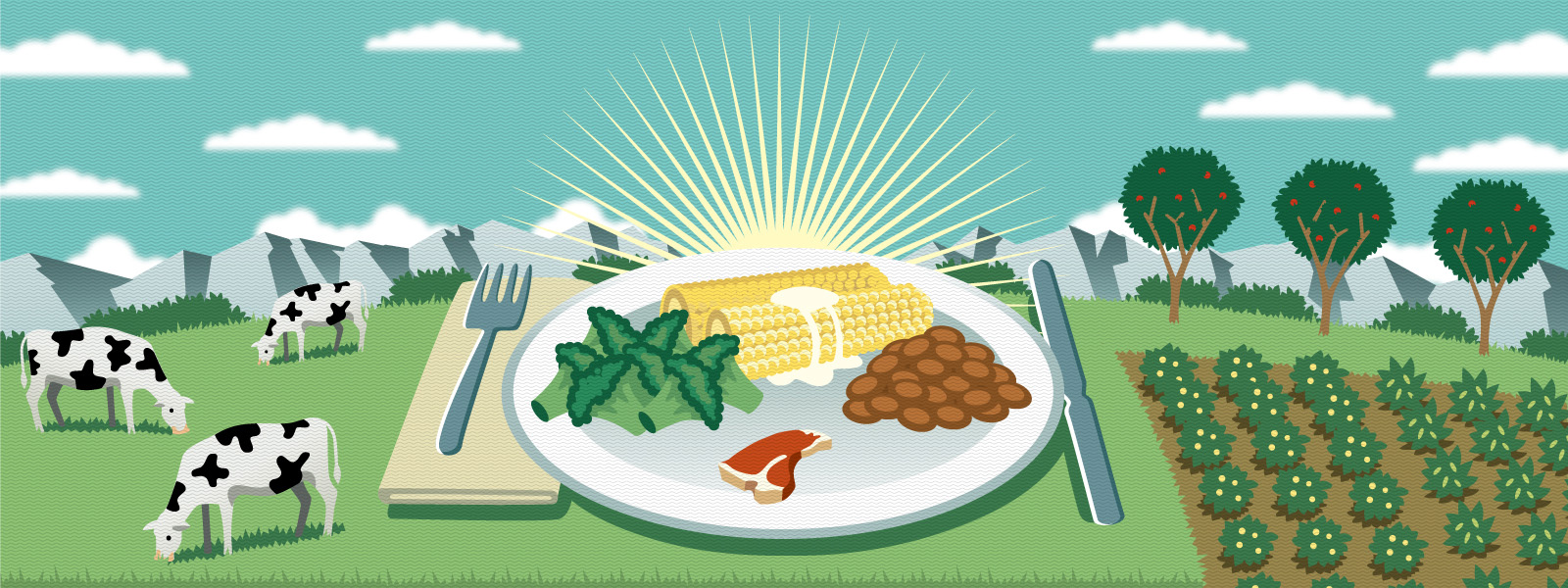
How much meat can we eat — sustainably?
By Bob Holmes Scientists find that a small amount of animal products could have a place in our diets without wreaking environmental havoc. But it’s far less than what we consume today, and only if farmed in just the right way. Read more

Russia is guilty of ecocide
By Michael Long and Michael Lynch OPINION: All perpetrators of environmental destruction should be held accountable Read more
From the archives
New optimism has sprung up in the search for dark matter, the elusive substance we can’t see but exerts its gravitational force throughout the universe. Startling recent findings from gravitational wave detectors have refocused attention on an old hypothesis, writes Briley Lewis in Aeon: Primordial black holes may explain some of the evidence attributed to dark matter. To learn more about these superdense suspects, see our story.
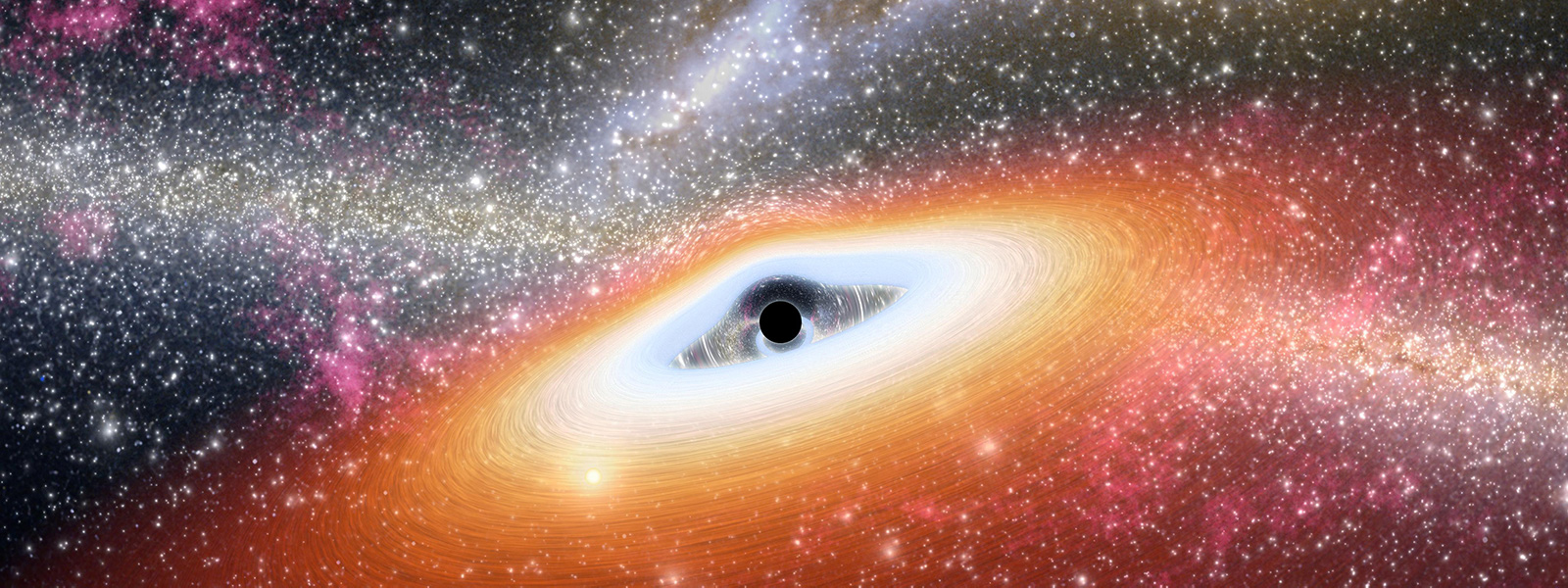
Primordial black holes could explain dark matter, galaxy growth and more
By Adam Mann A half-century-old, still-disputed idea about dense cosmic objects from the dawn of time could solve longstanding mysteries about the universe Read more
What we’re reading
Big-hearted
A blue whale’s heart can be larger than a washing machine and weigh more than half a ton. But that organ might be the ball and chain that keeps the world’s largest animal from growing even larger. For Vox, Benji Jones dives into efforts by scientists to investigate whale hearts, the trials of field work (no stethoscopes here), and how the research might help with the animals’ conservation. Bonus item: Readers can listen to a recording of a diving whale’s heartbeat.
Science or sci-fi?
Elon Musk’s giant Starship rocket is expected to soar into its first orbital test flight within months. As Musk tells it, the gleaming behemoth — which is still under development — will be humanity’s long-awaited ticket to other planets and escape from extinction, reports Sarah Scoles for Science. And for many scientists, Starship fuels dreams of exploring more planets, more often, with bigger, better instruments. But other space experts note that the newcomer hasn’t yet been tested. As Scoles writes, researchers are watching, and wondering whether Starship is “a vision of space science’s future, or a mirage.”
Voyage of the notebooks
In 2001, University of Cambridge library staff discovered that two of Charles Darwin’s notebooks were missing from the Special Collections Strong Rooms. The notebooks, written after the naturalist’s lengthy journey aboard the HMS Beagle, are filled with his “brilliant thoughts and dreadful drawings” including Darwin’s famous tree-of-life sketch, Simon Parkin writes for the New Yorker. Parkin speaks with Jessica Gardner, the university’s head librarian, on why she prioritized finding the missing notebooks and their recent, mysterious return.

Art & science
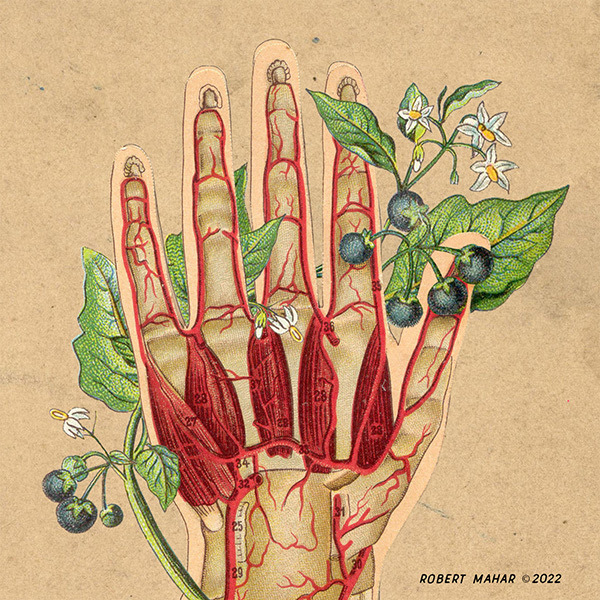
Botanical bodies
The toxic plants known as nightshades have a long and sinister history in folklore and medicine. Extracts of the plants, which contain powerful alkaloids, have been used as poisons for centuries. They are also a prominent ingredient in what was known as witches’ “flying ointment,” a magic salve that may have ushered in hallucinatory “flights.” When Carl Linnaeus introduced his system of naming organisms in the mid-1700s, the nightshades were given the scientific name Atropa, after Atropos, the third Greek fate who ends the lives of mortals by cutting their threads.
Now you can thread your own nightshade, with an embroidery sampler from California-based designer and artist Robert Mahar. “Nightshade hand” shown above, is one of several of his samplers that interweave images of lifeless body parts from 19th century anatomical illustrations with those of botanical specimens (some poisonous, some not). For more macabre samplers (crocus cranium, anyone?), visit his shop.