


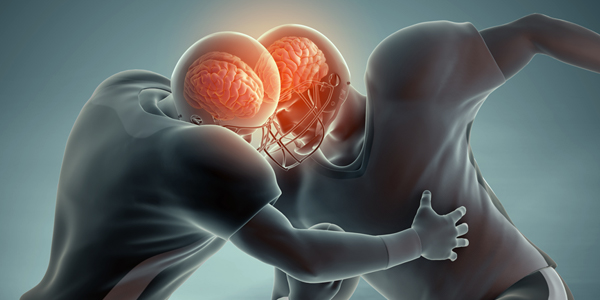
A new way of looking at concussions
By Helen Santoro Emerging research suggests that even mild hits to the head may damage the tiny lymphatic vessels that clear toxic chemicals and cellular debris from the brain. Read more.
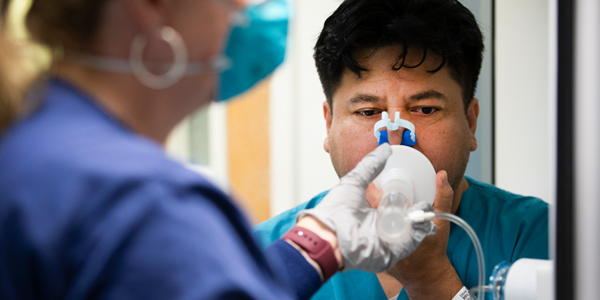
How to help Covid-19 long-haulers
By Syra Madad and Theodore Long OPINION: Patients with lingering symptoms need access to specialized clinics — and so much more. Read more.
From the archives
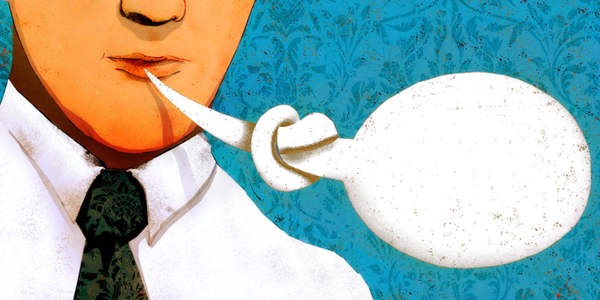
The new neuroscience of stuttering
By Amber Dance After centuries of misunderstanding, research has finally tied the speech disorder to certain genes and brain alterations — and new treatments may be on the horizon. Read more.
RESET: The Expert's Take
Talking shop
Psychologist Bruce Wampold, known for his research into psychotherapy’s beneficial outcomes, retired from the University of Wisconsin–Madison in 2016. The pandemic accelerated another parting of ways — at least physically: his job as senior researcher at the Modum Bad Psychiatric Center in Vikersund, Norway. Covid-related travel restrictions severely disrupted the monthly commute from his home in Wisconsin to Vikersund — a 15-hour flight each way. Now it’s looking like the rest of his time there will be spent remotely.
Another facet of Wampold’s work has also gone remote: talk therapy. Though traditionally done face-to-face, the past year pushed many people to explore therapy online. This has been good for some patients — those who have a hard time commuting to a therapist’s office, for instance (and for some people, he says, remote appointments may make keeping to a schedule easier). But, Wampold warns, the benefits may also be unequal. People without high-speed internet may be worse off than they were before the pandemic.
Inequalities have been a recurring theme of the pandemic and Wampold’s overseas work has further brought home to him such issues in US society. Norway’s robust social safety nets include free health care, and Wampold’s pondered whether mental health services in the United States are mere Band-Aids for larger issues, such as poverty. America’s pull-yourself-up-by-your-bootstraps individualism has been flagged by some scholars as a reason the nation doesn’t have a stronger social safety net. And yet Norwegians, like Americans, are characterized as individualistic, despite Norway’s generous social welfare programs. Wampold once asked a cultural anthropologist about that: “He said, ‘That’s why we have this system, so we don’t have to worry about what happens to neighbors or even family if there’s a crisis,’” Wampold recalls. “’We have a good social system so we can be individualistic.’”
What we’re reading
Tracking the virus
Spillover and spillback Outbreaks of Covid-19 at mink farms have shuttered the fur industry in parts of Europe and sickened workers and animals in the US. In December, a wild mink trapped outside a Utah farm tested positive for the SARS-CoV-2 virus, accelerating concerns that it could gain a permanent foothold in wild or farmed animals.
For High Country News, Wufei Yu interviews a virologist-veterinarian about the potential impacts. And a back-and-forth spread of the virus between minks and people appears to have already happened in the Netherlands; in Science, virologists Shi Zhengli and Peng Zhou provide context for that new finding. The scientists also suggest that mink should be investigated as the intermediate host (the primary host is thought to be bats) that first transmitted the virus to people.
Self-destruction When Covid-19 turns deadly, sometimes the culprit is an out-of-control immune response that causes widespread damage to the body. Now scientists are revealing new aspects of that story, writes Roxanne Khamsi for Nature. They’re investigating the role of “autoantibodies”— rogue immune molecules that attack certain body proteins — as possible drivers of the damage and possibly of symptoms that can continue long after an initial infection has cleared.
Distract yourself with science
Code words Be it the coding language Fortran or weather-forecasting models that use math — not hunches — to predict the rain, powerful computers are invaluable tools for modern science. But which particular computer parts or tools have had the biggest impact? For Nature, Jeffrey M. Perkel polled researchers for their thoughts. The article ends with a poll, letting readers weigh in on Perkel’s hits — and his misses.
Breathe “We tend to think of a lung as a simple pump: one gas is pulled in, another is pushed out,” writes Brooke Jarvis in the New Yorker. But there’s a heck of a lot more to it than that, she writes. “Our lungs are both protection and portal, the nexus of our relationship with an environment that can heal us as well as harm us.” In her info-packed review of a recent lung-focused book, Jarvis covers the often-overlooked role the organ plays in both our health and society, providing historical context and present-day concerns, including wildfires, Covid-19 and the deaths of men like George Floyd who could not breathe.
Art & science
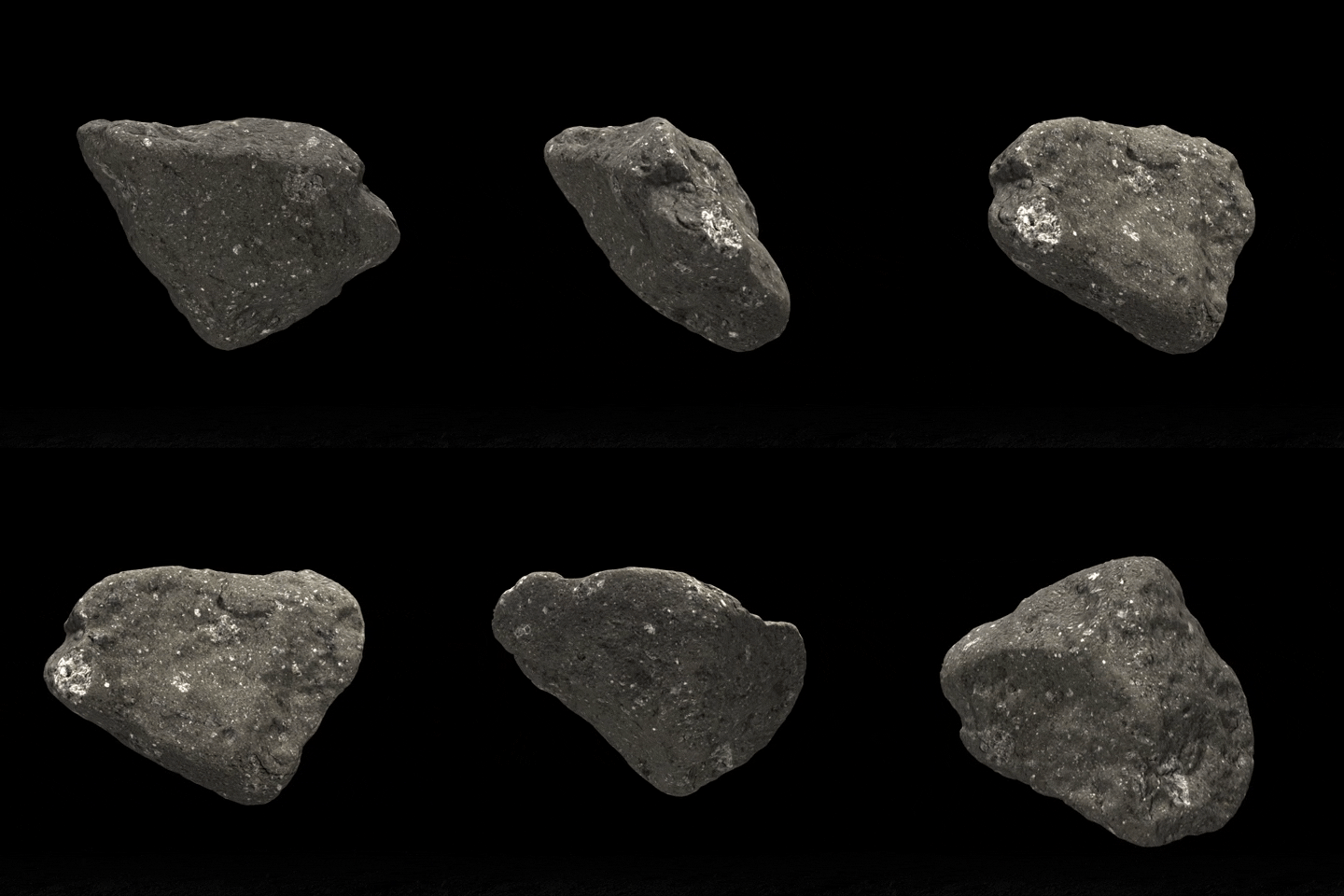
CREDIT: ASTROMATERIALS 3D / NASA
Virtual space rocks Meet lunar sample 10021,79 — a piece of one of the first rocks plucked off the surface of the moon by human hands. Or rather, meet its digital avatar. Collected from the lunar landscape roughly 10 minutes after Neil Armstrong’s “one small step,” this 14.7-gram stone is safely locked away at NASA’s Johnson Space Center. But now it and scores of other moon rocks, along with Antarctic meteorites, can be virtually handled by anyone, via a digital library called Astromaterials 3D.
As the digital library is stocked, each physical sample will be photographed from at least 240 different angles and internally scanned by penetrating X-rays, creating interactive 3-D computer models. Poke around the collection, which includes the famous Allan Hills meteorite, a piece of Mars that made headlines in 1996 when researchers thought they had spotted fossilized microbes lurking within.